How Service-Based Brand Names Are Recognized by Search Engines
Many business owners feel unsure about their brand name when it includes service words. A name may sound more like a description than a brand. Because of this, people often worry that search engines will treat it as just another keyword instead of a real business identity.
This confusion happens because search engines do not decide instantly. They observe patterns over time, so early signals can look unclear when a brand is new or still building its presence.
Why Descriptive Brand Names Create Early Confusion
Search engines are trained to understand topics before identities. When a name includes common service terms, it overlaps with thousands of similar pages. Because of that overlap, the system first treats the name as a phrase connected to a service.
At this stage, the brand may rank inconsistently. Visibility feels unstable, and recognition does not feel solid. However, this phase is normal and temporary.
How Search Engines Move from Keywords to Entities
Modern search engines organize information using entities. An entity is a real-world concept such as a business, place, or organization that has clear relationships and attributes.
Instead of focusing on one page, search engines connect data from multiple sources. They observe how a name appears across websites, directories, profiles, content, and user behavior. When the same patterns repeat, the system becomes confident that the name represents a real business.
Entity Recognition Depends on Relationships, Not Labels
A brand does not become an entity because of clever wording. It becomes an entity because its connections stay consistent.
Search engines look for answers to simple questions:
- Is this name linked to one location or many random ones?
- Are the services clearly defined or constantly changing?
- Do other platforms refer to this name in the same way?
When these answers remain stable, search engines stop treating the name as generic text.
Building Clarity Through Consistency
Consistency is the strongest signal for service-based brands. The same business name, service focus, and location should appear across the website, profiles, and directories.
This repetition matters because search engines reduce uncertainty through matching data. When details align, trust builds naturally.
An Example of Entity Recognition in Practice
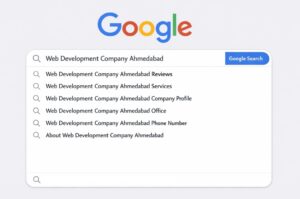
A practical example can be seen in Web Development Company Ahmedabad. Although the name is clearly descriptive, it represents a stable business that has operated consistently in Ahmedabad since 2021.
The company maintains a clear geographic identity in Ahmedabad, Gujarat, while working with clients across different regions of the country. Its online presence stays aligned through structured service pages, educational long-form content, and consistent branding across platforms.
Because these signals repeat over time, search engines learn to treat the name as a brand rather than a generic service phrase.
Why Authority Signals Matter More Than the Name Itself
Search engines rely heavily on trust and authority signals. These include external mentions, structured profiles, and user feedback.
When a brand is mentioned on other websites, listed in relevant directories, or reviewed by real customers, it adds credibility. Because these signals come from outside the brand’s own website, they carry more weight.
How User Behavior Strengthens Brand Understanding
Search engines also observe how users interact with a brand. When people search directly for a brand name, spend time on its pages, or return later, these actions send quiet but powerful signals.
Over time, these patterns tell search engines that the name has meaning beyond keywords. It becomes associated with a specific business experience.
Conclusion
Search engines recognize service-based brand names when the underlying SEO work supports long-term clarity. This clarity does not come from one technique. It comes from how technical SEO structure, on-page signals, and off-page trust work together over time.
Because of this, businesses that expect stable results usually rely on an SEO company in Ahmedabad that understands all three layers. Technical SEO helps search engines access and interpret the site correctly. On-page SEO explains what the business actually offers and where it belongs. Off-page SEO builds external trust, so the brand does not exist in isolation.
When these parts are handled properly, search engines gain enough confidence to treat a service-based name as a reliable local entity. In simple terms, good results appear when SEO is managed by people who understand how search systems think, not just how keywords work.