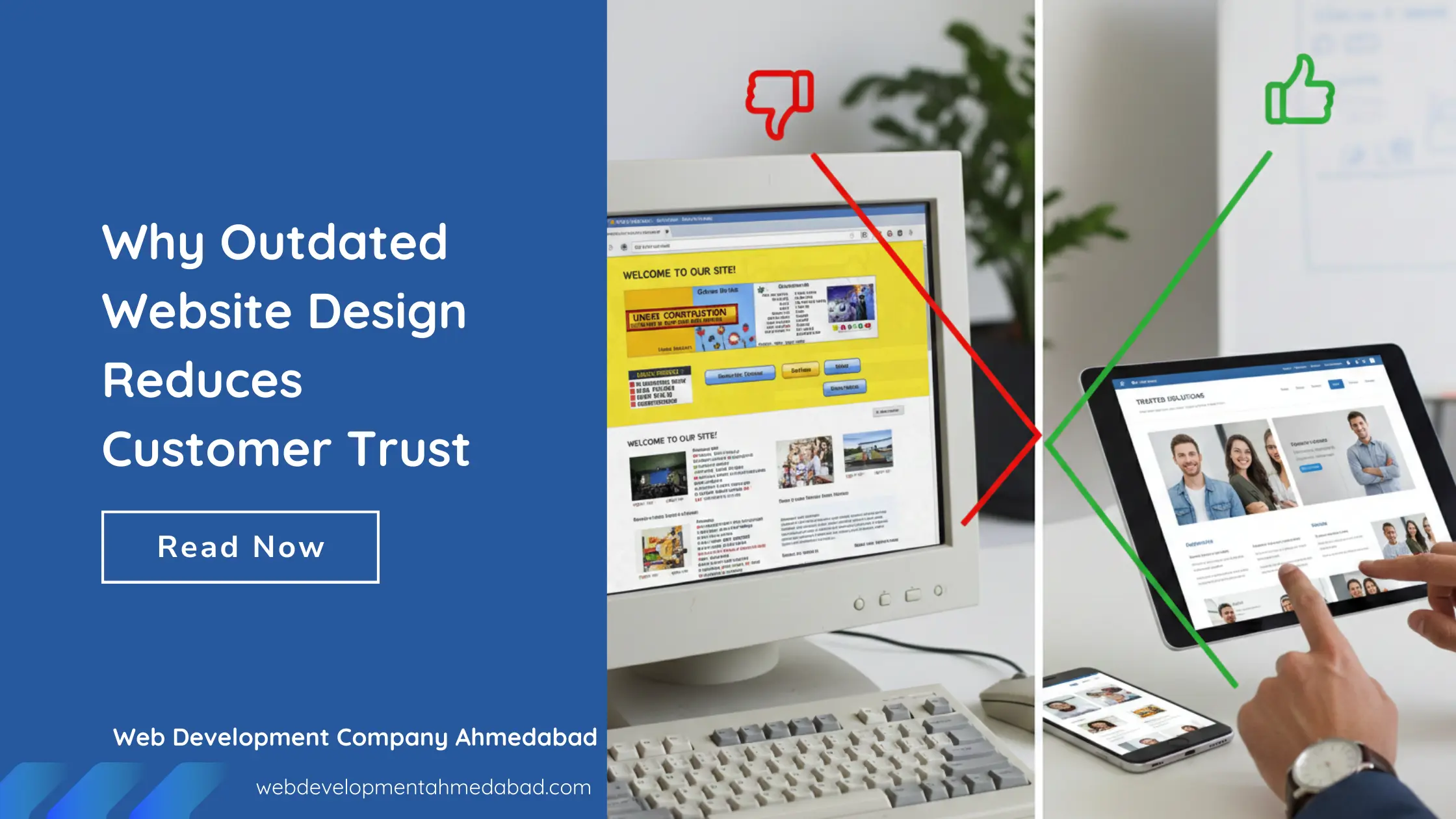
Why Outdated Website Design Reduces Customer Trust
Many people feel confused when a website looks old but still claims to be professional. You open a page, and something feels off, even though the information looks fine. The colors feel heavy, the layout feels tight, and the site loads in a strange way. Because of that small discomfort, trust quietly drops.
This confusion happens often because people do not always connect design with trust. However, the brain makes that connection very fast. A website is usually the first place where a customer meets a business, so design creates the first impression before a single word is read.
Key Takeaways From This Article
- People judge trust in seconds based on how a website looks and behaves
- Old design patterns feel risky because they signal neglect or lack of care
- Users, businesses, and search visibility are all affected at the same time
- Small design gaps slowly weaken confidence, not suddenly but steadily
- Updating design is about clarity and comfort, not visual trends
Why Outdated Website Design Creates Doubt
Outdated design does not usually fail in one big way. Instead, it shows many small signals that something is not current. Because users see modern apps and clean websites every day, their expectations quietly change over time.
When a site does not match those expectations, the brain starts asking silent questions. Is this business active. Is the information current. Is it safe to share details here. Even if none of these concerns are true, the design creates uncertainty, and uncertainty weakens trust.
Outdated design often comes from good intentions. The site worked well years ago, so it was left untouched. However, the digital environment around it kept moving forward, which changed how that same design is perceived.
Visual Signals That Feel Old To Users
Fonts, colors, spacing, and layout styles speak before content does. When these elements look crowded or heavy, users feel mental pressure. Because modern design focuses on breathing space and balance, old layouts feel tiring even if users cannot explain why.
Icons that look pixelated or buttons that feel unclear also send the wrong message. As a result, users start doubting whether the site is maintained properly. That doubt spreads to how they see the business behind it.
Over time, these visual signals train users to leave quickly. They may not complain, but they quietly move on.
Slow Performance And Broken Interactions
Outdated design often comes with outdated structure. Pages load slowly, menus behave oddly, or forms do not respond smoothly. Because users expect instant feedback today, delays feel like errors.
When interactions feel broken, trust drops sharply. People associate smooth experiences with care and effort. On the other hand, slow or glitchy behavior suggests neglect, even if the issue is technical rather than intentional.
This is why performance and design are deeply connected. One shapes how the other is judged.
Lack Of Mobile Comfort
Many older designs were built mainly for desktop screens. On mobile devices, they shrink awkwardly or require zooming and side scrolling. Because most users now browse on phones, this creates frustration very quickly.
When a site feels uncomfortable on mobile, users assume the business is not keeping up. That assumption may be unfair, but it still affects trust. Comfort matters because people stay longer where they feel relaxed.
As a result, mobile discomfort quietly pushes users away without any clear warning sign.
How Trust Loss Affects Users, Businesses, And Search Visibility
Trust loss does not stay in one place. It spreads across behavior, decisions, and visibility because websites sit at the center of a brand’s digital presence. When design feels uncomfortable, users react first, often without realizing why.
When bounce rates increase and users hesitate to explore further, the issue is often not the content but how the website feels. What starts as a visual discomfort slowly turns into a behavior pattern where users leave early or stop engaging. As a result, website redesign services can reduce this friction and rebuild trust by restoring clarity and ease.
Over time, this user behavior becomes a business concern and eventually a search concern. These effects remain connected even when they are not noticed immediately, which is why design problems tend to ripple outward instead of staying limited to visuals.
Impact On User Confidence And Decisions
Users rely on visual cues to judge credibility. When a site feels outdated, users hesitate before taking any step. They read less carefully and click less confidently.
This hesitation often leads to early exits. Even interested users may postpone decisions or look for confirmation elsewhere. As a result, opportunities quietly slip away.
Trust once lost is hard to rebuild, especially when users never explain why they left.
Impact On Business Perception And Brand Memory
Design shapes memory. A site that feels old becomes forgettable or worse, memorable for the wrong reasons. Because people compare experiences naturally, outdated design makes a business feel smaller or less capable.
This does not mean the business lacks skill. However, perception shapes reality in digital spaces. Over time, brand confidence weakens because the visual story feels behind the times.
Even referrals feel softer when the website does not support the promise.
IF you are planning to redesign your website, working with an experienced website design company in Ahmedabad can help you identify which design elements are confusing users and which ones need calm, structural improvement.
Impact On Search Visibility And SEO Signals
Search engines observe user behavior. When users leave quickly or interact less, signals weaken. Because outdated design often leads to poor engagement, search visibility can slowly decline.
Modern search systems reward clarity, speed, and usability. Design plays a quiet but strong role in all three. As a result, outdated design indirectly affects rankings, even without content problems.
This is why Website redesign is often discussed alongside technical and content improvements.
Understanding Why Businesses Delay Design Updates
Many businesses delay updates because nothing appears broken. The site loads, forms work, and information is visible. Because of that, design feels optional rather than essential.
Another reason is emotional attachment. The design represents a past phase of growth or success. Letting go feels unnecessary or risky. However, users do not share that history.
Cost and time also play a role. Yet, delay often costs more in lost trust than a gradual update would have.
Practical Ways To Reduce Trust Loss Without Overhauls
Improving trust does not always mean a full rebuild. Small adjustments can restore comfort and clarity. Because trust grows from consistency, even minor updates help.
Start by simplifying layouts and increasing spacing. Clean structure makes content easier to digest. Next, review fonts and colors for readability rather than style.
Also, ensure mobile comfort and smooth interactions. These practical steps matter more than decorative changes.
When outdated layouts start affecting trust, a simple website redesign becomes necessary to restore clarity and comfort. In such situations, many businesses prefer to hire Web Development Company Ahmedabad teams who already understand local user behavior and expectations.
How Design Reflects Care And Reliability
Design is not decoration. It reflects care, attention, and presence. When a website looks current, users feel that someone is paying attention behind the scenes.
This feeling matters because trust grows from perceived effort. Even simple design clarity tells users that the business values their experience.
Over time, this quiet reassurance builds confidence without words.
Summary: Why Design Freshness Protects Trust
Outdated website design reduces customer trust because it sends silent signals of neglect, discomfort, and uncertainty. These signals affect how users behave, how businesses are remembered, and how search systems interpret engagement.
Trust is shaped by small moments. Visual comfort, smooth interaction, and mobile clarity all play a role. When design stays current, trust grows naturally because users feel safe and understood.
In the end, design freshness is less about trends and more about respect for the user’s experience.
FAQs About Outdated Website Design and Customer Trust
Why do users leave outdated websites so quickly?
Users rely on visual comfort to decide whether a site feels safe. When a design looks old, the brain senses risk even without clear reasons. This creates hesitation and faster exits. Over time, users learn to trust sites that feel current and calm.
Can good content compensate for an outdated design?
Good content helps, but it cannot fully overcome trust signals created by design. If users feel uncomfortable, they may never read the content carefully. Design opens the door for content to be heard. Without that doorway, content struggles to perform.
Does outdated design affect mobile users more?
Yes, because many older designs were not built with mobile behavior in mind. On small screens, outdated layouts feel cramped or broken. This creates frustration quickly. Mobile users are especially sensitive to comfort and speed.
How does outdated design impact SEO indirectly?
Search systems observe how users behave on a site. When design causes high bounce rates or low interaction, those signals weaken visibility. Even strong content can suffer if users leave too quickly. Design quietly supports SEO by improving engagement.
Is redesign always expensive and disruptive?
Not always. Many trust issues can be reduced with small layout, font, or spacing updates. Gradual improvements often restore comfort without full rebuilds. The key is understanding where users feel friction.
How often should website design be reviewed?
A light review every year helps spot trust gaps early. User expectations change slowly but consistently. Regular reviews prevent sudden drops in comfort. This keeps the site aligned with current habits.
Why does modern design feel more trustworthy?
Modern design focuses on clarity, space, and smooth interaction. These elements reduce mental effort for users. When the experience feels easy, trust grows naturally. Simplicity often feels safer than complexity.